Wednesday, November 9, 2011

Long Exposure and Contre-jour effects

There are many certain effects in photography that are really popular. Two of the many are, Long exposure and Contre-jour effects. Personally, these are two of my favorites that I love to try and use. If you have photoshop, it should be really easy to use these to effects. If yo udon't have photoshop, thats all right! Photoshop just helps enhance the picture or add graphics.


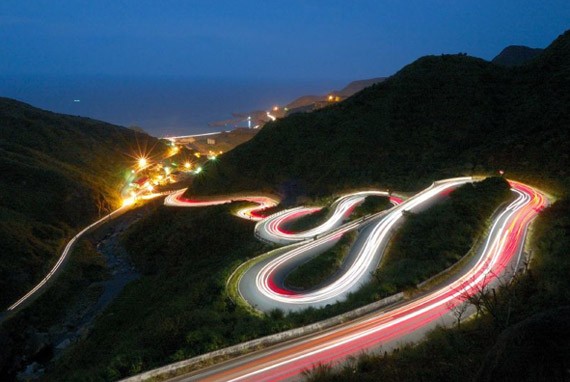
This first picture is an example of long exposure. It is really easy to capture a picture like this depending on the type of camera you have and if you know how to use it. Long exposure just consists of a narrow apperture and a long shutter speed. If you make the shutter speed longer, it will capture the movement in the picture.

This picture is an example of Contre-jour. Contre-jour is a french word for, "Agaisnt the daylight". Basically, you have an object's shape, such as a human, but yo udon't see really any defanition or details of who they are. You see them as a shape or a shadow. These I love because it shows more than just a person, but it tells a certain type of story.

Monday, November 7, 2011

Why photography?

For some people, photography is picking up a camera and taking a picture. This is perfectly fine, but for others, it goes on a deeper level. Some people use photography to express certain emotions and feelings. Not only can you use photography, but some people may use music or art. There are many ways to express how you feel with what your good at.

I think every picture tells somewhat of a story. If you look at any picture, no matter what it is, it has a certain affect on you. Now, granted some may not depending on the photographer.
 For example, what type of emotion do you get from looking at this picture? It tells a story. If you look at the back round you see that it looks like a run down village, not a lot of money, and due to all the mud and how dirty the child looks... little water. Each picture can tell a story. Photography can be used to show what your feeling. It can appeal to people in ways words never could.

Monday, October 24, 2011

Types of Photography

There are many different types of photography. There is Photojournalsim, Documentary photography, Action photography, Macrophotography, and many more. When someone goes into photography, they can pick a wide variety of things to use there photography skills at. There is many jobs where photographers are needed. In the media, for advertizing, wedding pictures... Photography helps us document the present, so we can tell a story to the past.  Today I  am going to focus on 3 different types: Photojournalsim, Documentary, and Macrophotography.


Photojournalism is where a person will take a specific photo, for a specific reason, and write about it. For example, someone who works for nation Geographic... they get to travel all around the world and document what is happening and different cultures and monuments that exsist. Documentary photography is a little bit different than photo journalism. They are used to document a specific event that is happening in the present. For example, elcetions, protest etc. etc. These photographers serve a very important part in are nation and world. And lastly, there is Macrophotography. Macrophotography is where pictures are taken at a very close range. Think of Microscope and how we use that to use at things that are beyond the range of our eye site. Well, Macrophotography is used dor little things like small bugs or creatures... anything small that is hard to look at in detail to our human eye.

Monday, October 10, 2011

Some useful photography tips

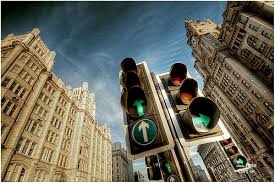
There are many little things that you can add to a picture to make it interesting. You can take any simple object and make a master piece out of it. For example, this stop light is just a plain stop light. But, you notice the angle the photographer used, it made the picture interesting. This way, it doesn't make it just a plain ol' stop light... but you can see the buildings and the sky. It gives a lot of characteristics to the photo.. all by just using a different angle.
Another good tip is to add angles, but also length. If you had length to a picture, it shows the depth of the picture and almost brings it to life.
 This picture you see that the railroad tracks go 'into' the picture. You can use roads, train tracks, a fence... really anything that has length to it. If you add you angle with the length it makes a pretty sweet picture!
One last tip is to make sure you have good lighting. If you are outside, you want to make sure that the sun light isn't uneven on your face. You wither need all shad, or all sunlight. This way when you edit, you can have a really good color to your face. If you are shooting outside, it is really handy to have a reflector. If y uhave one of these, it can relfect the sun light onto the face of the person or the center of the object yo uare shooting at, so it evens out the color.
It is the little things that you add to a picture to give it life. They could be little or big things you add.. but no matter what, it still makes the picture.
Thursday, October 6, 2011

Black and White Photography

Personally, I love black and white photography! All the expression and emotion that it gives off is amazing! Some how for me it can tell a story, depending on the picture.
I love the accent it gives off. You can do a lot with the lighting in black and white because you don't have to worry about skin tones. Mainly because if you do much with skin tones, you could make them to orange or to brown. This way, if you shoot in black and white, you only have to worry if you contrast is high or low enough or if it is to light or to dark. The contrast of a picture in like the intensity of the the light and dark in the picture. I would love to due just a shoot in black and white.. that would pretty much be amazing!

Monday, September 26, 2011

A picture to change our history

Many people don't realize how photography plays such an important role in our world, and even in our American history. Because of photography, people were able to capture the essence of what our history was. They were able to to capture a better image what who and what our history was.


Robert Capa was a photojournalist that changed our history and photojournalism. Photojournalism is where you travel as a photographer, but right about the pictures you take. For example, the pictures you see in the National Geographic.. these are from photo journalist. Robert Capa arrived on Omaha beach on June 6, D-Day, with the first infinity unit. He was there to document D-Day. He used 4 rolls of film, out of which 11 pictures turned out. One of these 11 pictures in labeled, "Pressure under fire"... this picture will become one of the most famous pictures of are time.

This picture has changed are history, all because of Robert Capa, the Photojournalist. To be able to capture time, and lock it into an image is priceless. This is why I love photography.

Monday, September 19, 2011

Film and digital cameras

In today's modern world, we are all about technology and everything is digital. We can almost do anything and everything using computers. Back in the 1880s, it was a little different. When photography first took off, they used film cameras. Instead of everything being digital, you have to use a type of film paper. I don't know a lot about film cameras... but, I do have one and am learning how to use it. It is good to know not only how to use a digital, but also film.
Once the digital cameras came out around the 1970s, it made the photographic world a lot more simple. Instead of processing the film, you could just download it to your computer. This also helped the photographic design take off as well. People could take photography to a whole new level. They all complimented each other.  Photography has advanced so much since the 1970s... and proceeds to grow in new possibilities opening up to technology.

Monday, September 12, 2011

Editing photos

Everyone has there own way of editing pictures. Some people like to use extreme editing with photo shop or an online editing site and some people like to do the bare minimum of editing. I have a mixture of both. Depending on the picture, I will decide if it needs black and white, cross press, sepia, or sometimes I will mess with the curves of the picture. The 'curves' of a picture are like using your own type of effect. Instead of black and white, you could make it pink and orange, or black and white with more contact. 
If your done messing with the color or how light and dark it is, you can go with the focus of the picture. You can make some things blurry but keep some things in focus. It really helps if you have a good camera with a lense,  like a canon or a Nikon. I have a Nikon D60 and it helps when I want to focus on a certain thing. In this picture in the girl with the rain, it shows that the focus is not only on the girl, but also the rain. This is usually the cameras doing. Also, one last thing to add, it is really easy to edit photos that are in 'raw'. You just have to change the settings on your camera from JPG. to raw. This will help a lot when trying to edit pictures.

Tuesday, September 6, 2011

How to catch the perfect shot....

Many different photographers have different ways of catching the perfect picture. For me, it is all about the placing of the picture. What are you taking a picture of? Whatever the subject is, you want to make sure you place it right in the picture. When taking pictures of people, I try and keep the person out of the center of the picture, and try and keep their head to the top of the picture. This way, there isn't any extra space in the picture, and puts full attention on the subject.
Some other things I like todo when capturing the perfect picture is backround. if I have two subjects of a picture; one being a person, which would be the 1st subject, and some sort of object, such as the eiffle tower, which would be subject two, I would keep the 1st subject still out of the center, but closer to the lense. This way, I would still have the person as the main center of attention.

Monday, August 29, 2011

History of photography

The word, "photography" comes from the greek language. "Photo" means light and "graphy" which means to draw. When someone would use the word, "photography" it would mean capturing images by the action of light. One of the first people to use this word was Sir John F.W. Herschel in 1839. This is one of the first cameras called an, 'camera obscura'.  When they used this first camera, they would let light define the picture.


In the 1880s, cameras were usually used by, and for, the rich and famous. We could not get them like we do today. Since the 1880s, the world of camer's has progressed enormously. Not only do we have film cameras, but we have digital, throw away, and even under water cameras. And now today, photography has been introduced to the modern world.. the world of industry. It has been made easy for everyone.. but the people who desire this art truly understand it.

Friday, August 26, 2011

Introduction

 What does your soul look like? Does it look like a football or horses? Does it look like the body of a car or in the smooth scetch of a pencil? Mine, looks like this...

 My camera captures what my heart and soul wish to express. The eye to my soul in the lense in my camera. To be able to take a picture and keep it forever is one thing, but stealing a moment from time is another. Being able to turn a moment into an art, is without price. So, with this blog, I am going to write about photography, the in's and out's, and why I love to express myself with it.